Speaking
Four talks. One throughline.
I speak from the patient's chair and the designer's desk. No prescriptions, no protocol — just what worked, in the order it worked, told plainly.
Request a date
Tell me the window. I'll tell you what's open.
Pick the season you're planning for — it lands in my inbox with the speaker one-sheet attached, and you get a personal reply within two business days.
What happens after you request a date
I reply within 2 business days
You'll get my availability for that window, the speaker one-sheet, and a link to book a 15-minute call.
We confirm the details
I'll ask about the event date, audience size, format, travel, and budget so I can quote an exact fee.
I send a simple agreement
Once signed and the deposit is in, I hold the date and we start tailoring the talk for your room.
Fee range $3k–$7.5k · Keynote, workshop, fireside, or virtual · joe@joejacksoncreative.com
Hear the room before you book it.
The flagship keynote, recorded as a narrated film — five minutes that show the tone, the pace, and what your audience walks out carrying.
Prefer the video version?
The full narrated keynote — Joe's voice, the real slides, The Rebuild Method™ end to end. Nothing loads until you press play, so skip it if you'd rather just read.
Share it internally with your committee — it's the fastest way to get a yes.
You Don't Bounce Back — You Build Forward.
In June 2020 a car crash rewrote my life: traumatic brain injury, a broken neck, nearly a year in a wheelchair, and chronic pain that still visits. This talk is what I found on the other side of trying to recover the old version of me — a deliberate, designed process for building the next one.
What the room leaves with
- →Why the language of bouncing back quietly keeps people stuck.
- →The seven moves of The Rebuild Method™, in the order they actually work.
- →How imagination, immersion, and stillness change what a body will attempt.
- →One next honest step each person can take before they leave the room.
Designing the Room Around Recovery
A patient's perspective on the environments recovery happens in — and what design can do about them. I spent months looking at ceiling tiles. This is what I wish those rooms, and the people in them, had been designed to do.
What the room leaves with
- →What patients hear underneath clinical language.
- →Environment as an active part of the treatment plan.
- →Immersion and nature exposure as practical, low-cost tools.
- →How to hand agency back to someone who has lost most of it.
Intuitive Resilience™ for Creative Teams
Twenty-five years designing for other people, two companies built, and one year that broke the whole system. What I learned about creative work under pressure — and why intuition is a discipline, not a mood.
What the room leaves with
- →Designing decisions when the brief keeps changing.
- →Quieting the noise long enough to hear an actual signal.
- →Building a creative practice that survives a hard year.
- →Making the next move without the full plan.
The Rebuild Method™ Workshop
The framework, worked through rather than watched. Small groups move through all seven steps with guided stillness, imagination work, and a written next-step commitment each person leaves with.
What the room leaves with
- →A completed personal rebuild map.
- →Two stillness practices that work in ordinary settings.
- →An imagination exercise for a future that isn't visible yet.
- →One committed next step, written down and witnessed.
Not sure the room fits? It probably does.
Survivors, caregivers, therapists and counselors, leadership teams, faith communities — and anyone rebuilding after a change they didn't choose. The crash is the illustration, not the subject.
Who this talk is forSpeaker one-sheet
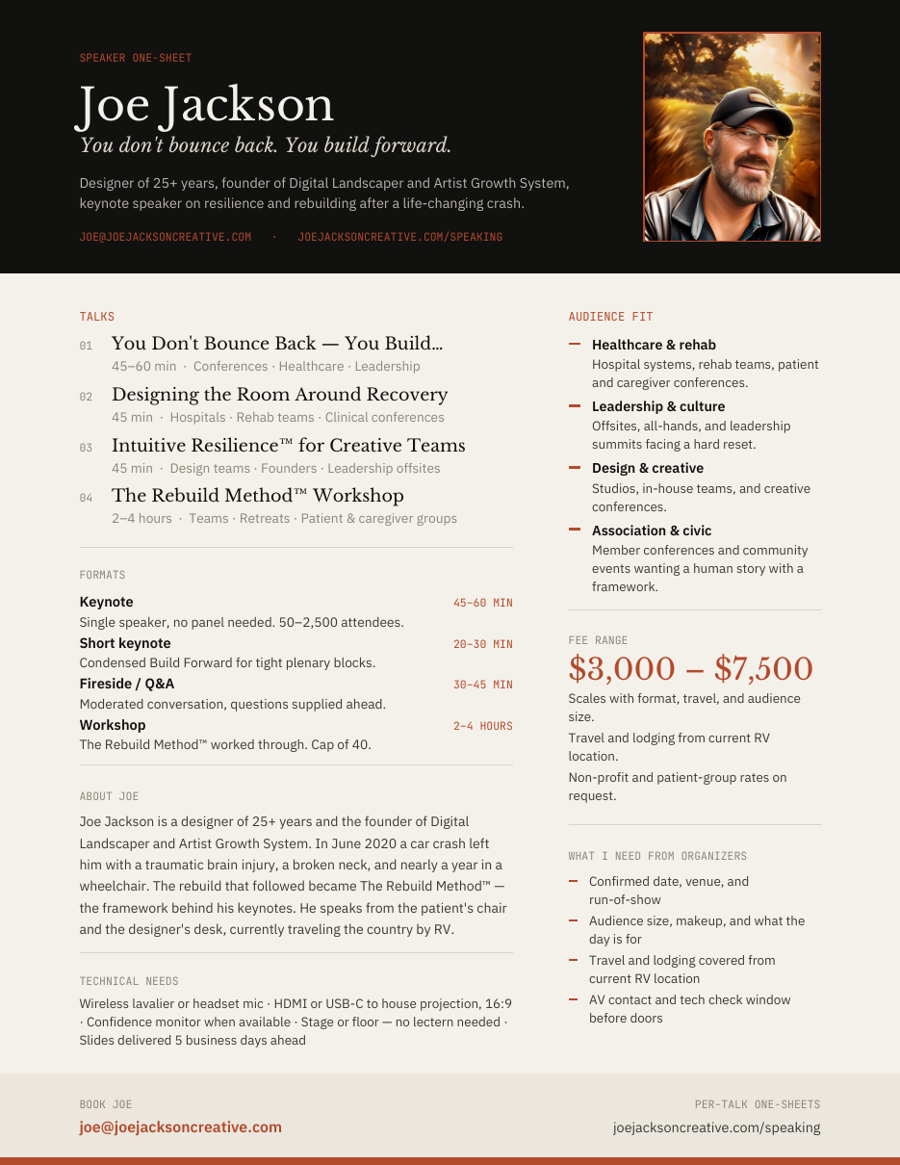
One page, everything they need.
One page with all four talks, formats, audience fit, fee range, technical needs, short bio, and headshot — ready to forward to a program committee.
- →Four talks with durations and audiences
- →Formats: keynote, short keynote, fireside, workshop
- →Audience fit by industry
- →Fee range and travel terms
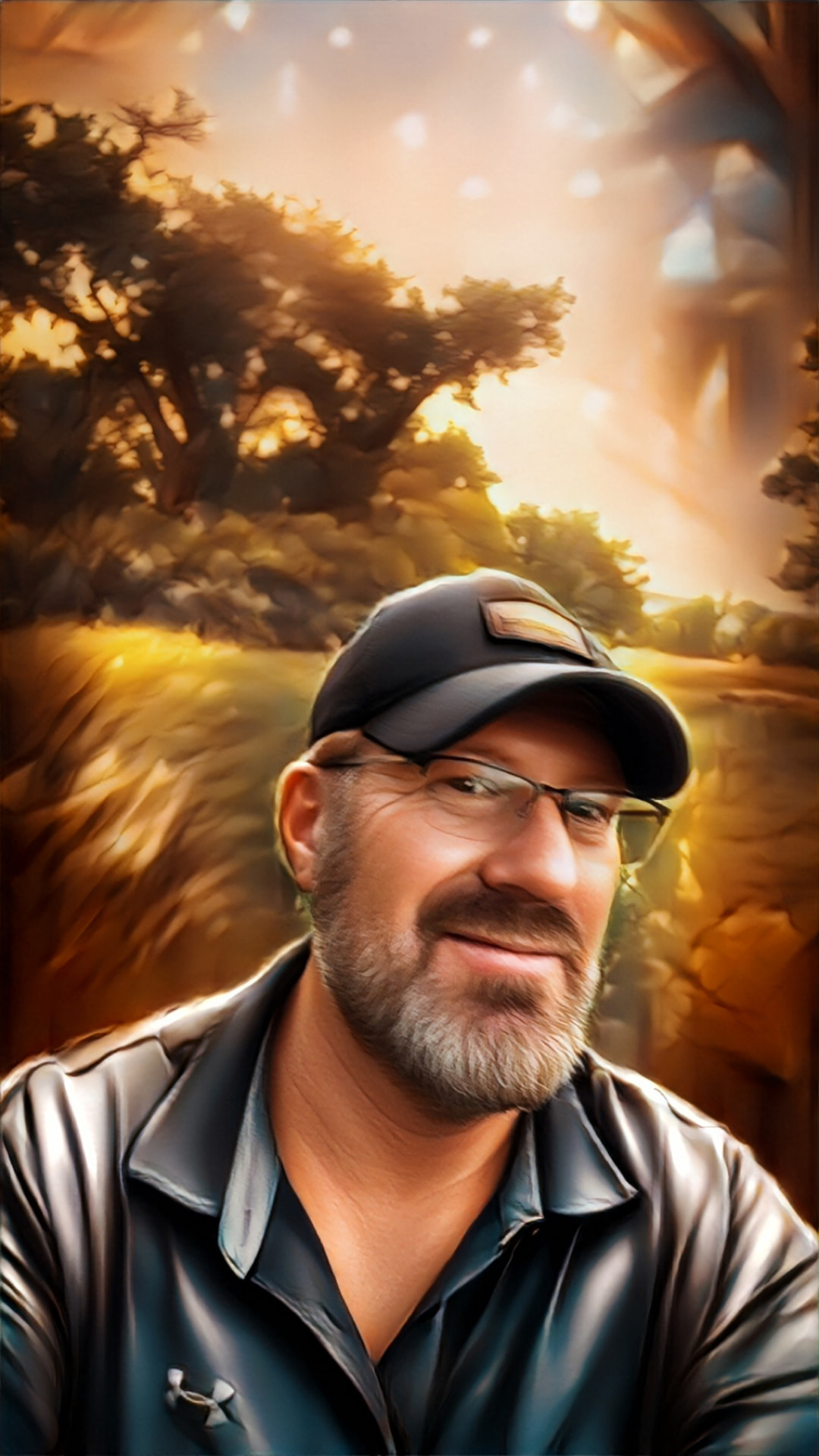
- →Short bio and headshot
- →Technical needs and what I need from organizers
Media kit
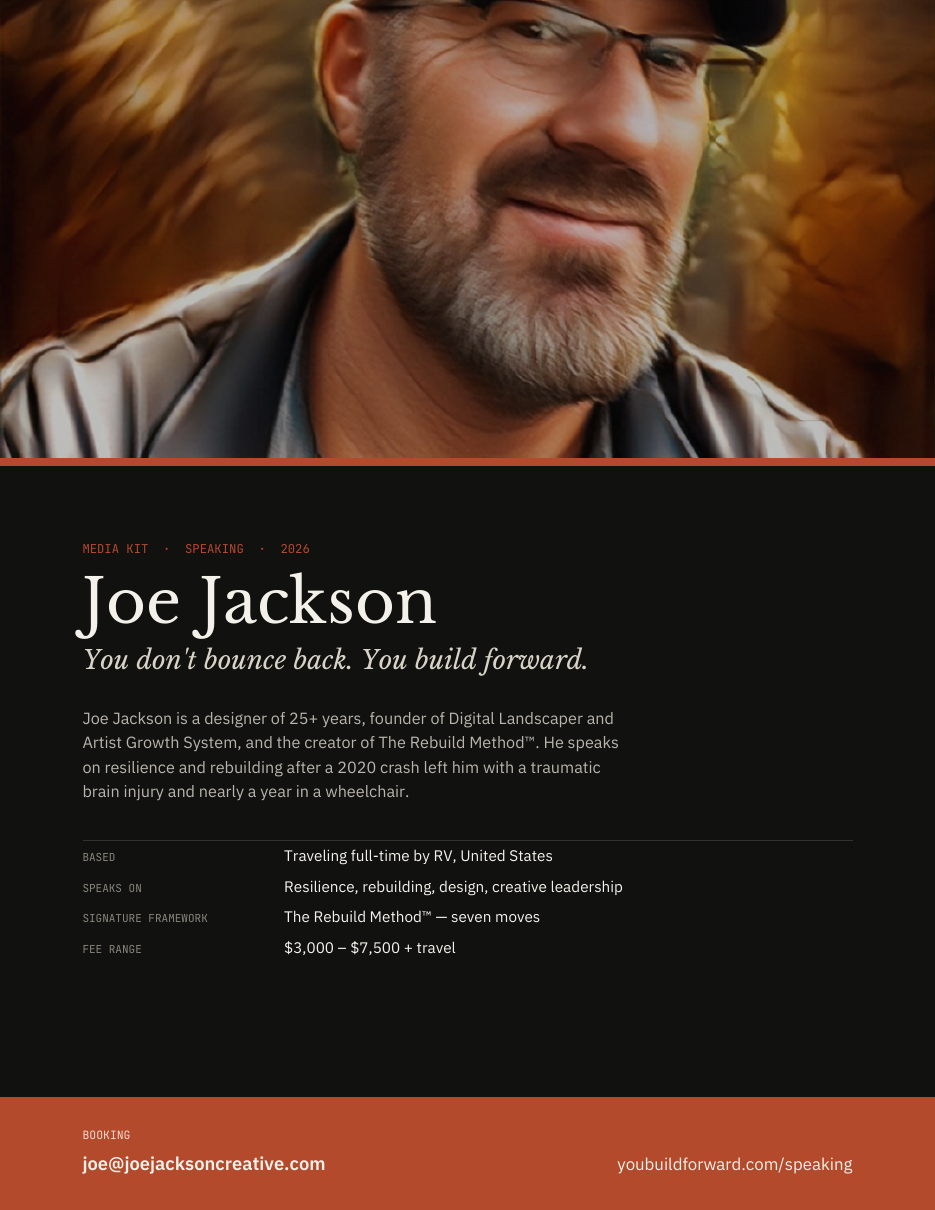
The full kit, ready to circulate.
Four-page kit for conference organizers to circulate internally: bios, an introduction script, all four programs, formats, audience fit, fee range, technical needs, promo copy, headshot, and brand colors.
- →Short and full bios plus a stage introduction script
- →All four talks with abstracts and takeaways
- →Formats, audience fit, and fee range
- →Technical needs and what your event gets
- →Program blurb and social copy ready to post
- →Headshot and brand colors
Per-talk one-sheets
Or just the talk they're considering.
Bio, talk description, takeaways, format, fee range, and technical requirements — one PDF per talk, ready to forward.
Ask a booking questionRelated talks, if this one isn't quite the fit.
Flagship keynote · 45–60 min
You Don't Bounce Back — You Build Forward.
Conferences · Healthcare · Leadership · General audiences
Healthcare & rehabilitation · 45 min
Designing the Room Around Recovery
Hospitals · Rehab teams · Clinical conferences
Leadership & creative culture · 45 min
Intuitive Resilience™ for Creative Teams
Design teams · Founders · Leadership offsites
Recommended next steps
- 01
Skim the one-sheet
20 secBio, abstract, takeaways, formats, fee range, and tech needs on one page you can forward.
- 02
Check your date
30 secThe live calendar shows what's open, held, or booked. Pick a day and it carries into the form.
- 03
Send the details
40 secEvent, audience, format, budget. You'll get a reply within two business days with a hold.
Sample agenda
Ninety seconds to see the whole hour.
What the room actually experiences, minute by minute. Timings flex for 45- or 30-minute versions; the arc stays the same.
- 0:00–0:06
The night everything changed
Cold open with the crash, told plainly. No slides for the first ninety seconds — the room gets quiet on its own.
- 0:06–0:15
Why 'bounce back' fails
The language of recovery, and how it quietly asks people to restore a version of themselves that no longer exists.
- 0:15–0:38
The seven moves of The Rebuild Method™
Each move paired with one concrete story from the wheelchair year and one translation into the audience's own work.
- 0:38–0:48
Stillness and imagination, demonstrated
A two-minute guided practice the whole room does in their seats — the part people email about afterward.
- 0:48–0:55
One honest next step
Everyone writes a single committed step on the card at their seat. Optional pair-share with a neighbor.
- 0:55–1:00
Close and Q&A handoff
A tight close, then Q&A or a moderated fireside if the program includes one.
Session outcomes
- →A shared vocabulary for change that doesn't require pretending nothing happened.
- →The seven-move framework, written down and usable the next morning.
- →One stillness practice that works in an ordinary hallway or office.
- →A written, witnessed next step from every person in the room.
- →A closing story leadership can quote back for months.
Build Forward — 60-minute keynote
Calendar
Where the talk has been, and where it's headed.
Verified availability
October 2026
- Booked
- On hold
- Open window
- Available
Loading the calendar…
Speaking examples & verified dates
- Nothing locked in yet — the calendar is wide open.
Also bookable on these dates
The half-day workshop runs the same booking flow as the keynote — in person or virtual. Exercises, printable worksheets, and community access between sessions.
Routing through your city?
I tour by RV, so adding a stop near you is usually easy — and travel costs get simple.
Open booking windows
I route the RV in regional loops, so travel is cheapest and dates are easiest when your event lands inside one of these windows.
Oct 2026
Southwest loop — AZ, NM, TX
Dates open
Dec 2026
Colorado & Front Range
Dates open
Feb 2027
Pacific Northwest — OR, WA
Dates open
Apr 2027
Southeast — NC, TN, GA
Dates open
Booking
Tell me the room, the date, and who is in the seats.
Booking FAQ
What organizers usually ask before they email.
- What formats do you offer?
- The flagship keynote runs 45–60 minutes with a moderated Q&A afterward. I also offer a 45-minute healthcare talk, a 45-minute creative leadership talk, and a hands-on 2–4 hour workshop. The workshop moves the audience through the full Rebuild Method™ with guided exercises, not just slides.
- How far ahead should we book?
- Most conferences and teams book 3–6 months out so we can align the talk to your audience and schedule a brief prep call. I can sometimes accommodate shorter timelines if the date falls inside an open booking window — just ask and I'll be direct about what's possible.
- What is your fee range?
- Keynotes start at $3,000 and scale to $7,500 depending on audience size, travel complexity, prep time, and whether you add a workshop or second session. The workshop rate includes materials and a post-event follow-up. Travel is separate and billed at cost.
- Which audiences is this right for?
- Healthcare and patient-experience conferences, therapist and counselor gatherings, creative and design leadership summits, and company all-hands going through hard change. It also lands with general audiences carrying personal change — divorce, estrangement, caregiving, loss — because the crash is the illustration, not the subject. It lands best with rooms of 80–1,500 people who want a human story with a usable framework attached — not a motivational set piece and not a clinical lecture.
- What should the room expect on the day?
- A single story told plainly, three tools the audience can use Monday, and a close that hands the room something to decide rather than something to feel. I arrive the day before when travel allows, do a 15-minute tech check, stay for the hallway conversations afterward, and send your team the slides plus a one-page recap within 48 hours.
- What do you need from organizers?
- A clean wireless lapel mic, a confident A/V hand, and a confidence monitor or a clear view of the main screen. I travel with my own clicker and backup slides. For the workshop, I need round tables, flip charts or whiteboards, and space to move between groups. The most important thing is a 30-minute audience brief two weeks before the event.
- Do you speak from a faith perspective?
- Yes — it's the foundation, and I name it. God was concretely present in my recovery: I was angry first, prayer answered that with forgiveness, and gratitude took over. Gratitude is my attitude. How much of that language shows up depends on your room. In a church or a faith-based conference I speak it directly. In a hospital, a rehab conference, or a corporate all-hands I name it once, honestly, and then keep the framework in plain language everyone can use — no altar call, no assumption about what anyone believes. Tell me your audience and I'll tell you exactly how it will land.