Notes from a rehab conference
A room of clinicians, one patient at the podium, and the quietest ninety seconds I have spoken into.
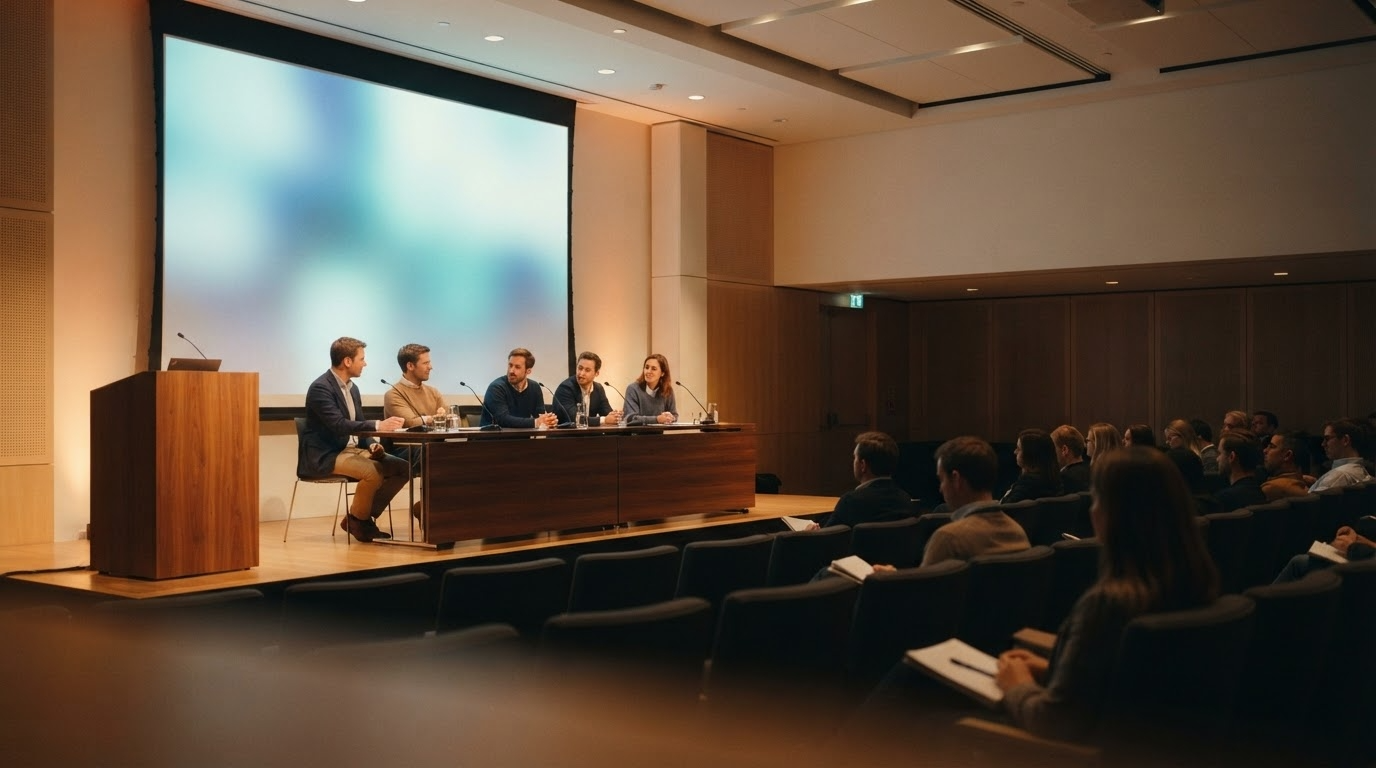
Two hundred and forty clinicians in a hotel ballroom with the carpet you would expect. I was the second-to-last slot on day one, which is the graveyard of conference programming, and I had been warned that people leave early for the reception.
Nobody left. I want to be precise about why, because it was not the speaking.
About eleven minutes in I described the ceiling of room 4-East: the tile with the water stain shaped like Michigan, and the fact that I counted the perforations in it enough times to know there are 361 in a full tile. There is a particular silence a room makes when a group of professionals recognizes something they built and never looked at. It lasted about ninety seconds and it was the loudest thing that happened all day.
In the Q&A a physical therapist maybe two years out of school asked the question I now think about constantly: 'What did we say that you heard differently than we meant it?' I gave her the honest list. 'We'll see how you progress' lands as 'we do not think you will.' 'Let's be realistic' lands as 'stop hoping in front of me.' 'You're doing great' lands as nothing at all after the fourth time, because it is what you say to everyone.
She wrote it down. Then eight other people wrote it down. I did not expect a language audit to be the takeaway of a talk about imagination.
The other thing I learned: the caregivers in the room — and there were maybe thirty, sitting mostly at the back — did not ask a single question in public and formed a line of eleven people afterward. Every one of them opened with an apology for taking my time. Whatever we are doing to support the people supporting patients, it is not reaching the back of the room.
I flew out the next morning with three follow-up bookings and a note in my phone that says: 'ask the caregivers first next time.'